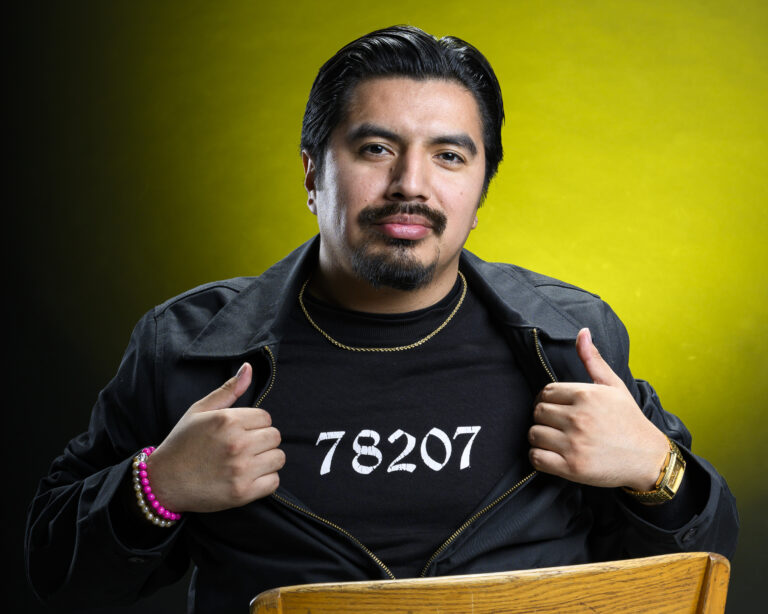
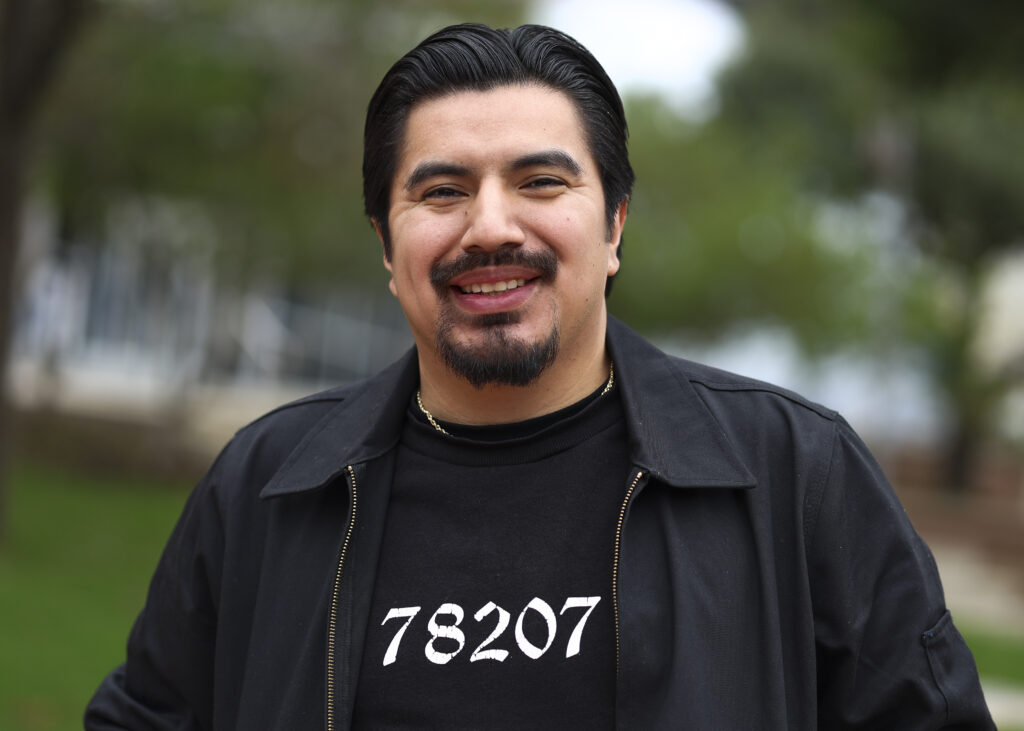
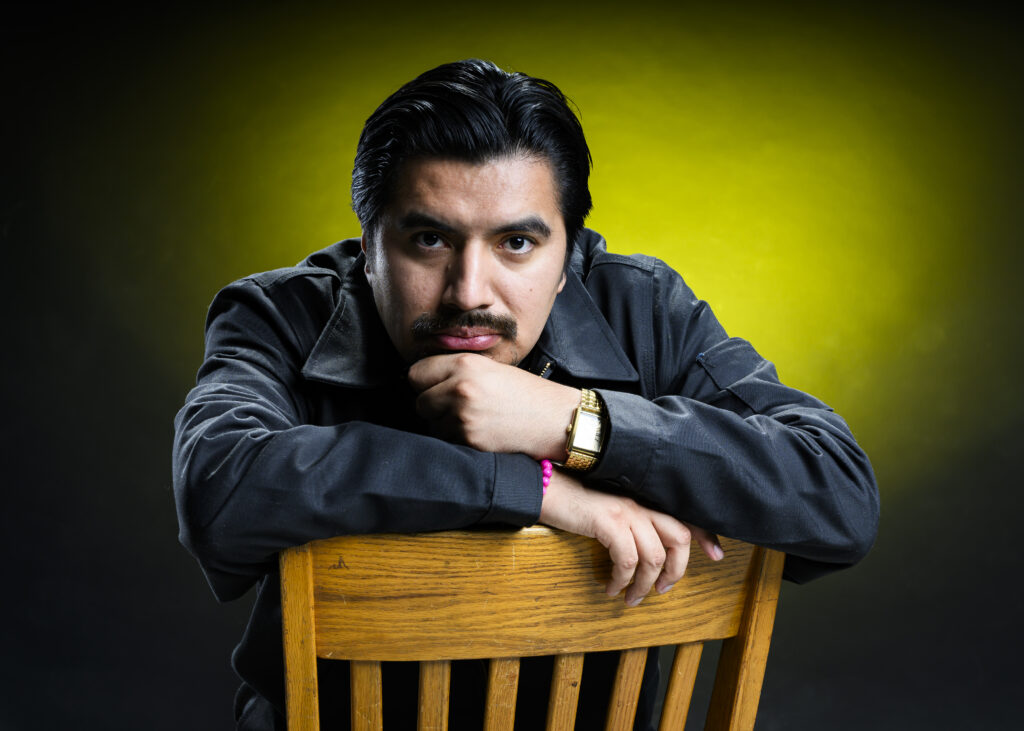
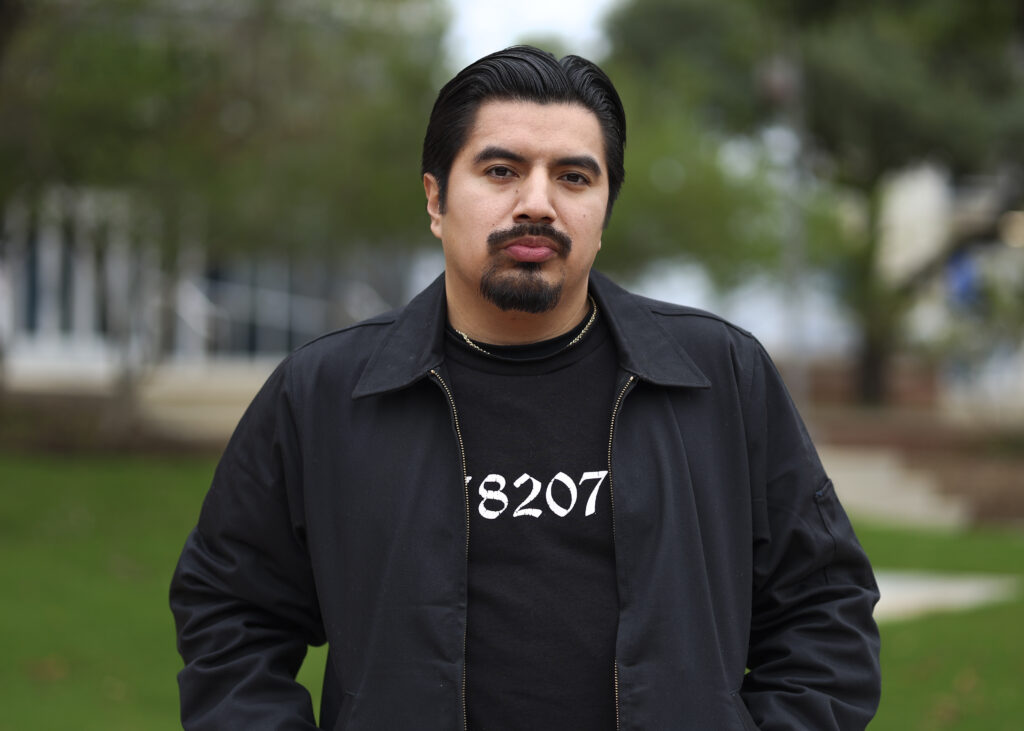
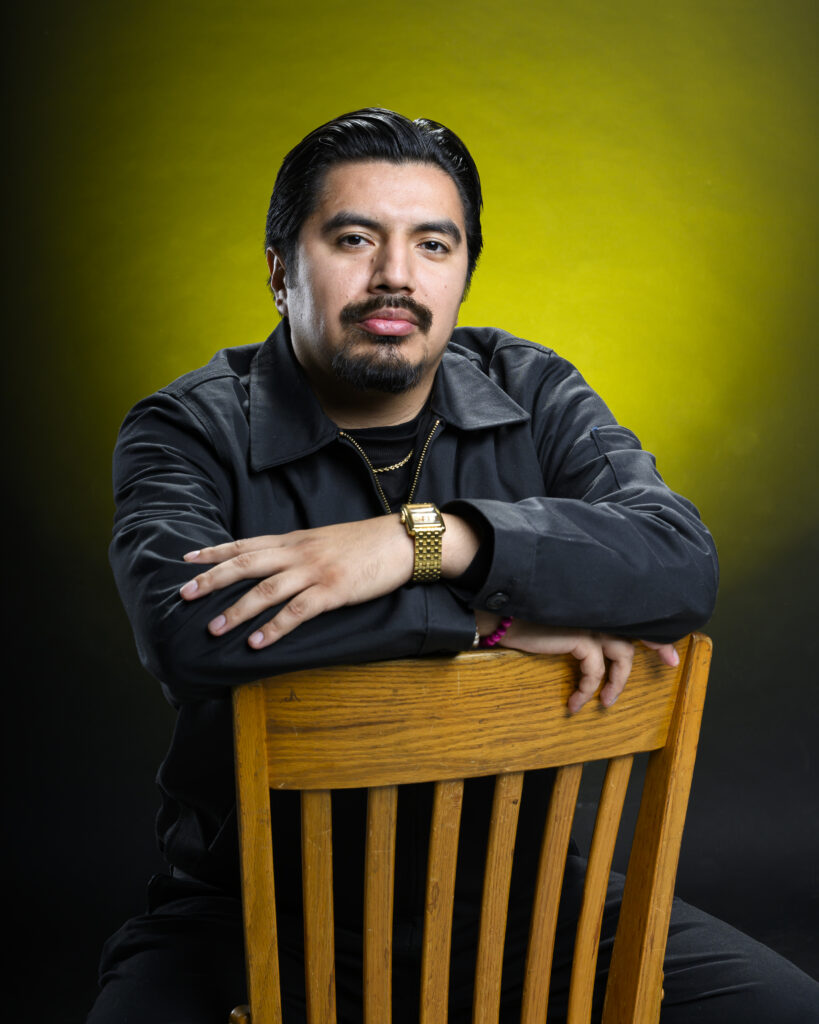
Spectrum News 1 Journalist Jose Arredondo is shaped as much by loss as by purpose. At 15, he lost his mother, a moment that set him on an unexpected path toward storytelling.
Growing up on San Antonio’s west side, Arredondo learned early what it meant to feel unsafe, to move from place to place and to figure out survival long before adulthood was supposed to begin. But he also learned a strong sense of community — the kind where neighbors look out for one another.
“[My mother’s death] made me grow up fast,” Arredondo told the Sundial. “It made me listen more.”
That listening eventually led him into journalism. The idea first came from his “tío” (uncle), a real-estate guru who treated every conversation like a life lesson.
“Think about journalism,” his uncle told him. “You like writing. You ask good questions.”
He said losing his mother when he was 15 taught him humility, the importance of listening and the value of helping others — qualities he carries into his reporting. His mother, who struggled with addiction, suffered a stroke on June 13, 2010.
After his mother’s death, Arredondo attended Robert E. Lee High School briefly, and his journalism teacher Brenda Slatton mentored him until he moved to Roosevelt High School.
Arredondo studied and practiced journalism at Roosevelt, where journalism teacher Allison Boerger introduced him to SAC’s Urban Journalism Program, a summer workshop for underprivileged San Antonio students.
Tricia Buchhorn, who recently retired from SAC after 30 years as a lab technician and advisor in the journalism program, introduced Arredondo to the director of Spectrum News, who gave him an internship. He has served as a multimedia journalist for Spectrum for nearly six years.
One of his earliest major stories was a deep dive into human trafficking, and the assignment opened his eyes to the broader role journalism can play in giving a voice to overlooked communities.
His work gradually pulled him toward stories about the community he grew up in, and he produced an Emmy-winning special on students returning to the classroom after a year and a half of remote learning.
He approached the story through the experiences of west side students and teachers, knowing they would face gaps in learning social skills and the basic rhythm of being back in school.
“I had friends calling me, crying,” he said. “Kids are fighting every day; they don’t know how to be around each other.”
This led Arredondo and his team to interview administrators, parents and students in Austin, San Antonio and Dallas. What Arredondo didn’t expect was that a camera crew would follow him while he worked on his story. He guided the crew through his old neighborhood — from the San Anto Cultural Arts center to a series of murals that have lined the west side since the early 90s. To Arredondo, the murals are more than public art; they are “textbooks,” created with community input and designed to preserve stories often missing from classrooms. He pointed out murals about education, Chicano walkouts, Indigenous roots, West side families and the Vietnam War — where many young Chicanos from San Antonio were drafted and never returned.
“We don’t learn about ourselves in school. If we’re lucky, we learn in college. But I learned about who I am from these murals right here,” Arredondo told the crew as he stood beside a mural on the wall of an old Dollar Store.
Winning the Emmy was meaningful, but what stayed with him was the impact it had on the people in the story. He remembers calling a teacher featured in the special to share the news. She broke down in tears. Exhausted by constant pressure from parents, administrators and shifting policies, she had been close to quitting. She told Arredondo his call felt like a sign to keep going.
“That was really rewarding,” he said. “That’s one less great teacher our public schools lose.”
Arredondo also won an Edward R. Murrow Award for his coverage of the Uvalde school shooting. He said families trusted him because he did not rush to get soundbites and allowed them space before recording. The approach is rooted in his mother’s advice to “be present for people during their hardest moments.”
Arredondo remains close to his west side community. He has taught photography at the neighborhood cultural arts center and mentors young people interested in media. He also serves as vice president of the San Antonio Association of Hispanic Journalists, where he advocates for opportunities for students who come from backgrounds like his.
His close friend, Albert Gonzalez, an artist and muralist, met Arredondo when he profiled him for one of his first major assignments. Gonzalez said he was struck by how “deeply prepared” Arredondo was.
“Jose was the first person I met who was genuinely passionate,” Gonzalez said. “He knew my story before I even had to explain it. He did his research. It didn’t feel like he wanted a soundbite, it felt like he wanted to understand me. He made it feel like I was talking to someone who really cared, not just a reporter,” he said.
Gonzalez said Arredondo’s upbringing shows up in the determination and integrity he brings to his work.
“He wasn’t going to become just another statistic,” Gonzalez said. “He wanted to be a voice — a role model — for the kids growing up the way he did. He wants to make his mother proud and his community proud.”
Gonzalez said mentorship is at the heart of who Arredondo is.
“He knows how powerful it is for a kid to see someone who looks like them succeeding,” he said. “He doesn’t want to just be the guy on TV. He wants to be the guy who helps his community.”
Gonzalez said he has seen firsthand the confidence Arredondo inspires in young people — from scholarship recipients to students he visits in classrooms.
“He empowers people. He makes them feel seen,” he said. “Thirty years from now, people are going to look back at his stories as part of the history of San Antonio.”
Vincent Davis, a general assignment reporter and columnist for the San Antonio Express-News, is a friend and mentor of Arredondo’s.
“Jose was one of the most driven teens I’d ever met,” Davis told the Sundial. “He covered news events on his own when he didn’t have a job in the media … He was honing his skills to be ready when the doors of opportunity opened for him.”
Davis said Arredondo’s work is deeply rooted in the memory of his mother.
“Her memory keeps him grounded and telling stories that she would have enjoyed,” Davis said. “You won’t find another reporter who shines a light on his culture with pride as Jose does.”
Davis said Arredondo’s humility is evident in the lasting relationships he builds.
“It shows in the space he leaves while filming someone pouring out their heart,” he said. “His quiet demeanor shows his respect. His humility shows in the people who stop him around town. All affected by his genuine interest in their lives.”
Arredondo’s commitment to mentoring students is also an extension of how he was raised, according to Davis.
“He’s a student of the ‘each one, teach one’ philosophy,” Davis said. “He always makes time to talk with young people about the challenges and fortitude it takes to make it in journalism … I’d say being authentic is his outstanding attribute,” he said.
Long after a story airs, Arredondo checks in on sources “who number in the hundreds across Texas,” and Davis described Arredondo’s work as guided by a clear sense of truth-telling.
“I think we’re kindred spirits in our love for telling stories and giving a voice to those you rarely hear in local news coverage,” he said.
Arredondo said if he could tell his younger self something, it would be to reassure himself that he was on the right path. He avoided partying, stayed disciplined and made careful decisions because he knew “the margin for error was small.”
He credits Davis for once telling him, “You found your voice — keep that stride,” a message that pushed him further into community reporting.
Arredondo continues to prioritize stories about education, youth and the everyday struggles of working-class families — people who remind him of where he comes from. Turning away from these stories, he said, would feel like turning away from his own neighborhood.
Celebrity stories might draw clicks, but that’s not his purpose. What matters to Jose Arredondo is showing up with honesty, staying connected to the people he reports on, and showing young West Siders that they can find their place in journalism too.
Read Next: Pulitzer Winner’s Career Started in SAC’s Journalism Program