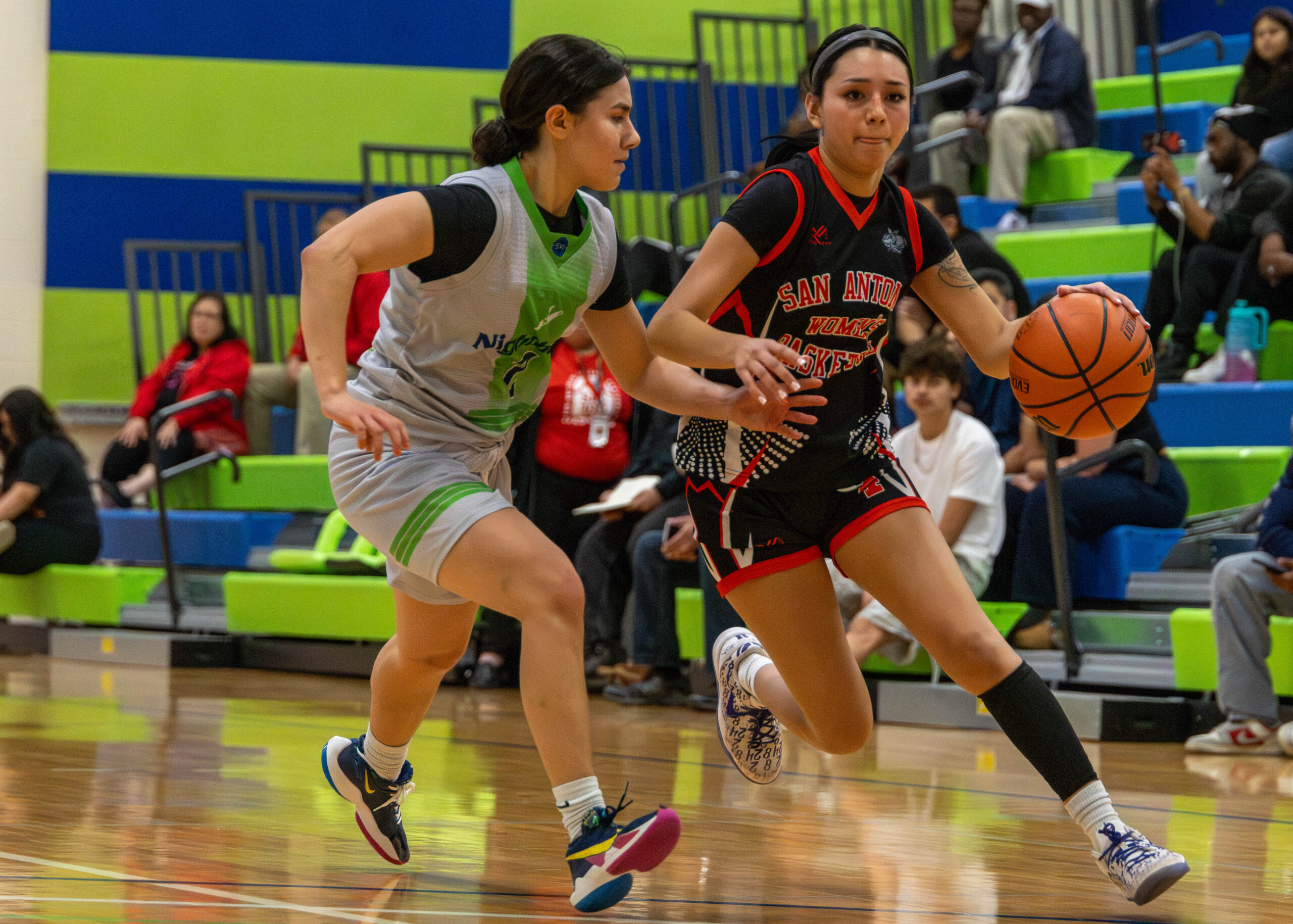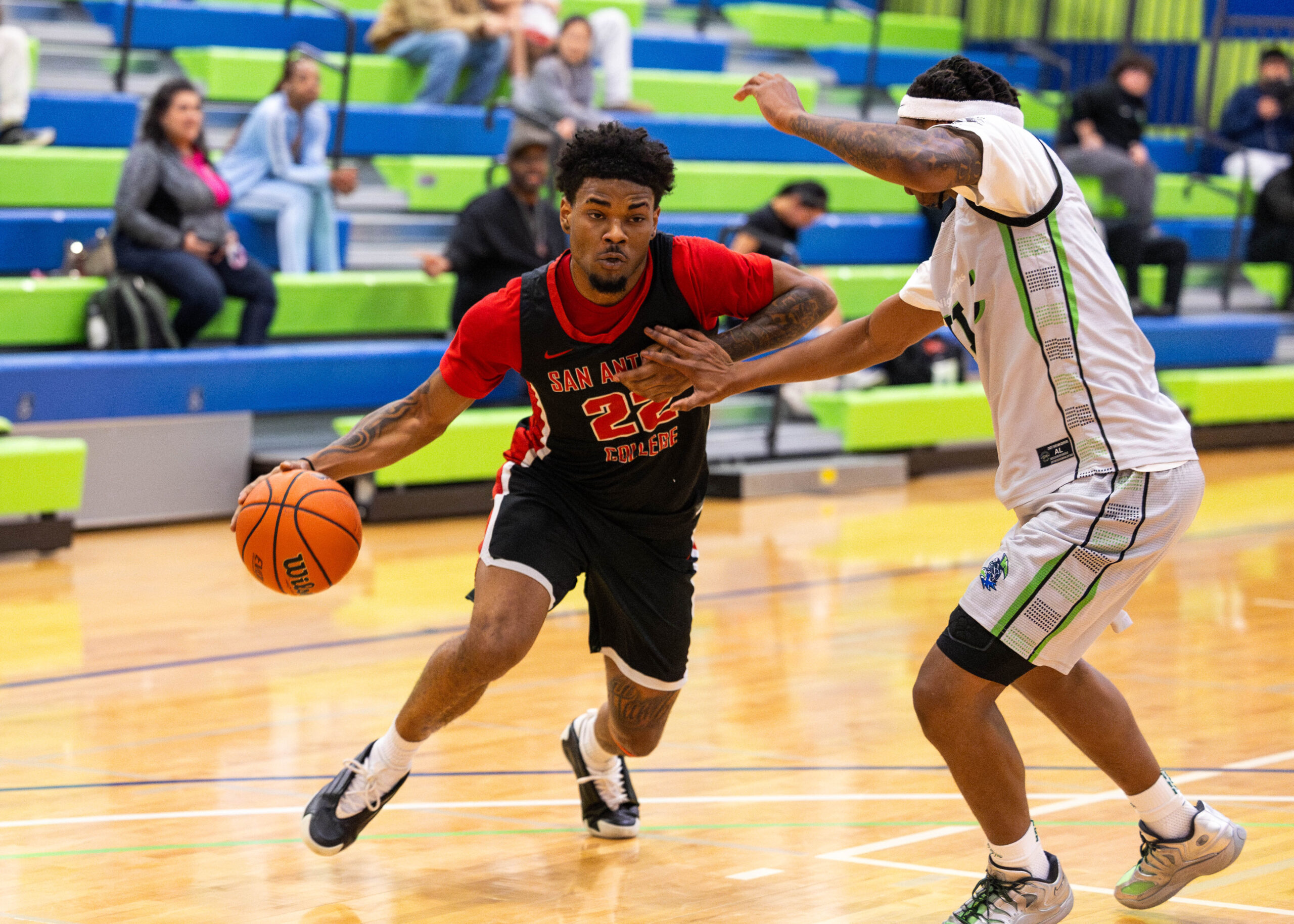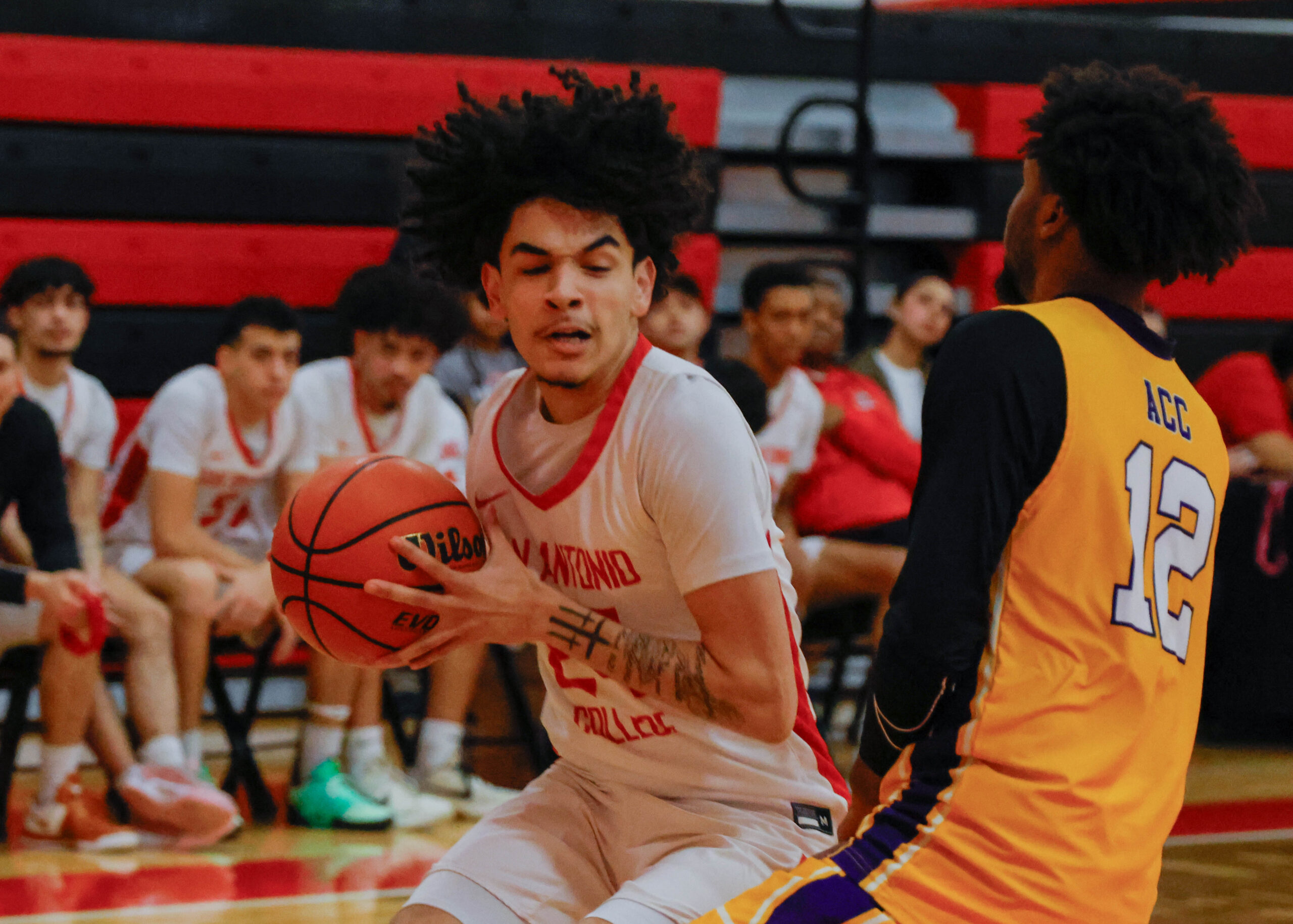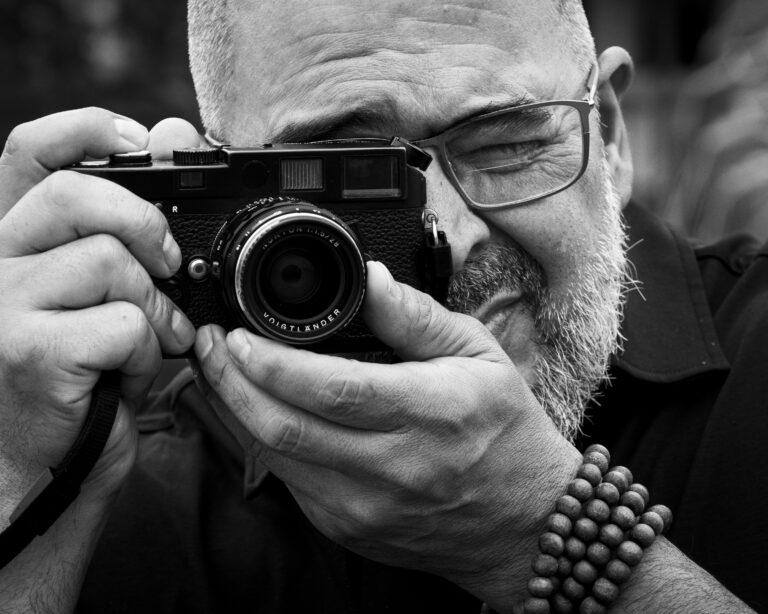
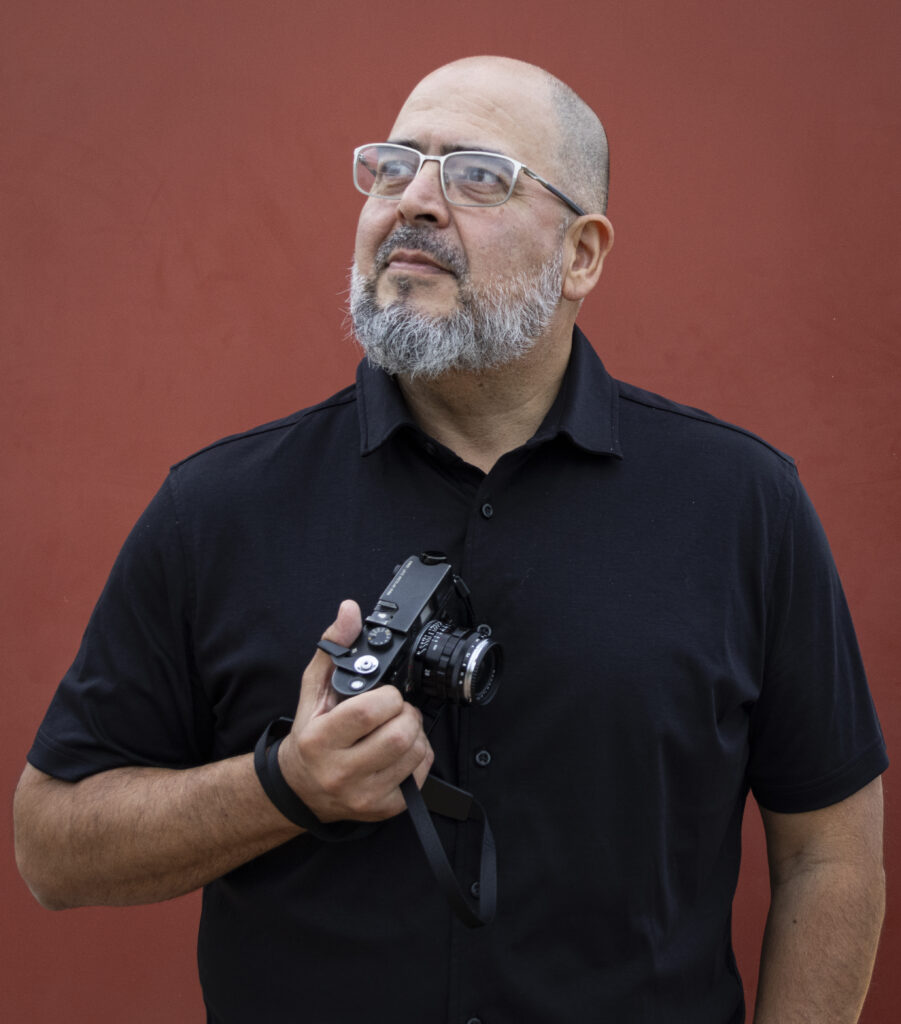
Rodolfo Gonzalez was 13 when his mother surprised him for his birthday, taking him to Montgomery Ward to pick out his first camera. He walked back and forth in front of a glass case filled with cameras, debating between getting a Nikon FM or a Canon AE-1 Program.
“I was like a kid in a candy store,” the 56-year-old Pulitzer-Prize-winning photojournalist recalled. “I decided on the Canon because it was similar to the one my stepfather had at home, and I knew that if I got the same brand, I could use all his lenses.”
When he got back to his mother’s car, he immediately opened the box, read the manual and started learning the camera’s functions.
“The camera became an extension of my body,” he said.
A graduate of San Antonio College’s journalism program, Gonzalez’s career as a photojournalist spans several decades. He held staff positions at the Rocky Mountain News, the Providence Journal, the Fort Worth Star-Telegram and the Austin-American Statesman.
Gonzalez was a member of the Rocky Mountain News staff that was awarded the Pulitzer Prize for Breaking News Photography for their coverage of the Columbine High School shooting in Colorado in 1999.
Gonzalez’s parents migrated from Mexico, and he was born in Harlingen, Texas. As a child, he was fascinated with his stepfather’s camera, and when he turned 13, his mother, Herlinda, bought him his first camera.
“From a very young age, I liked to tell stories through images. People gave me the opportunity to photograph them, and I felt that I should share those stories with the world,” said the father of two. “When I pick up my camera, I feel great; it’s like putting on a Superman suit.”
In high school, Gonzalez carried his camera everywhere. When he was 17, he was walking home from school and observed police officers and citizens gathering around a crime scene. He snapped some photos and submitted them to the San Antonio Express-News and the San Antonio Light. The Express-News published his photograph.
“That’s when I knew for sure, this is what I want to do,” he said.
While studying journalism at San Antonio College, Gonzalez served as a staffer for the student newspaper, The Ranger.
“SAC’s Journalism program is excellent,” Gonzalez said. “I spent hours practicing in the darkroom; [the Ranger] was my first job as a reporter, and it was during my first summer at San Antonio College that I confirmed I wanted to dedicate myself to this profession.”
Retired SAC Journalism Professor Irene Abrego, who studied journalism at SAC and worked in the journalism program for 25 years, worked with Gonzalez at The Ranger. She said his endless curiosity and empathy make him a great journalist.
“Rodolfo is a deeply empathetic man, and it is precisely that empathy that made him a great photographer,” she said. “Curiosity is one of the fundamental characteristics of any journalist, and that’s what sets him apart. I always enjoyed working with him. I learned a lot from him.”
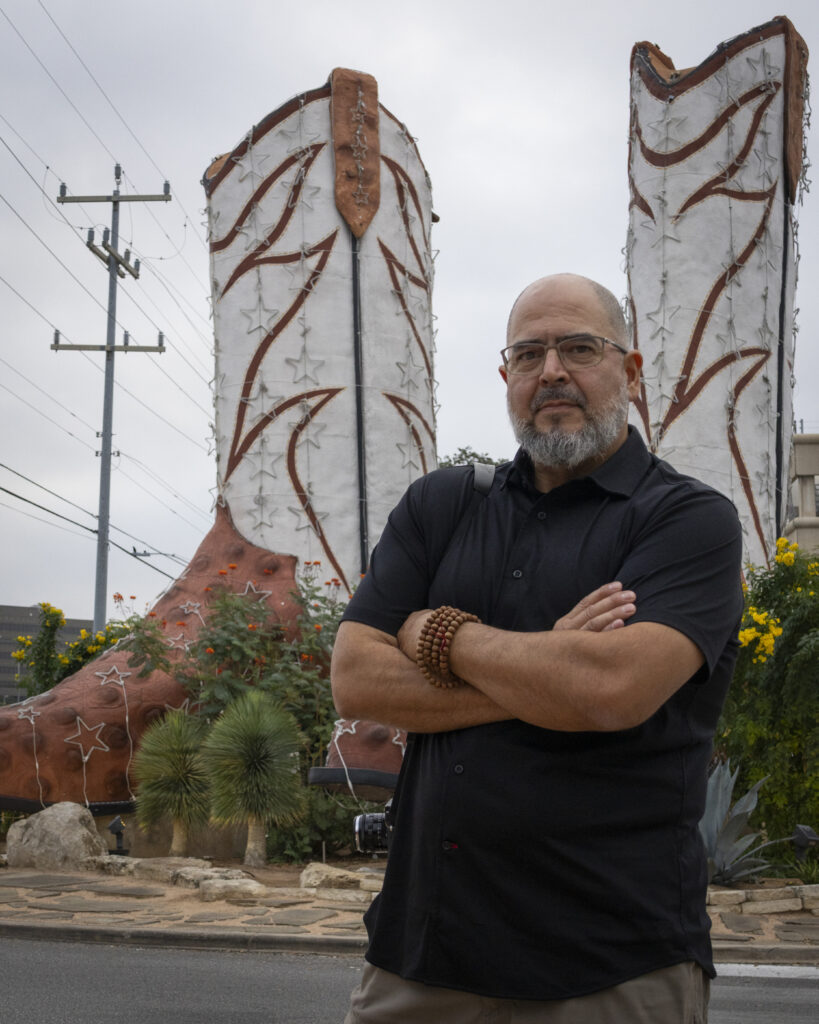
SAC had strong relationships with local journalism outlets, where students could practice and develop professionally, and Gonzalez earned an internship at the San Antonio Light newspaper.
“That’s where I had my first staff job,” he said. “I connected with several great photographers; I became like their shadow … I was always asking, ‘What can I learn? Can I help out? Can I go along?’ That was my first real test of what it meant to be a photojournalist.”
Gonzalez said the experience was pivotal because the publication allowed him to connect with everything he needed to know to be a professional photojournalist.
Associated Press Photographer Jack Dempsey, who has worked as photojournalist for more than 30 years, met Gonzalez at a football game when Dempsey was a high school student and Gonzalez was just starting out at the San Antonio Light.
“He approached me on the sidelines of a football game between Clark and Marshall — this seasoned professional with a serene confidence — and struck up a conversation that would change my life,” Dempsey said.
Gonzalez became Dempsey’s first mentor and helped him land his first freelance jobs in his senior year of high school.
“Rodolfo Gonzalez has always been Rudy to me. He is a fantastic photographer whose talent is matched only by his generosity,” Dempsey said.
Gonzalez helped Dempsey unlock his potential. During Dempsey’s first week as an intern, Gonzalez took him aside after a shoot that hadn’t gone as planned. Dempsey was feeling defeated and insecure, and Gonzalez led him across the street and patiently taught him how to properly balance ambient light and flash. As cars passed, Gonzalez took Dempsey’s camera and confidently made some beautiful portraits while breaking down technique after technique until Dempsey finally understood.
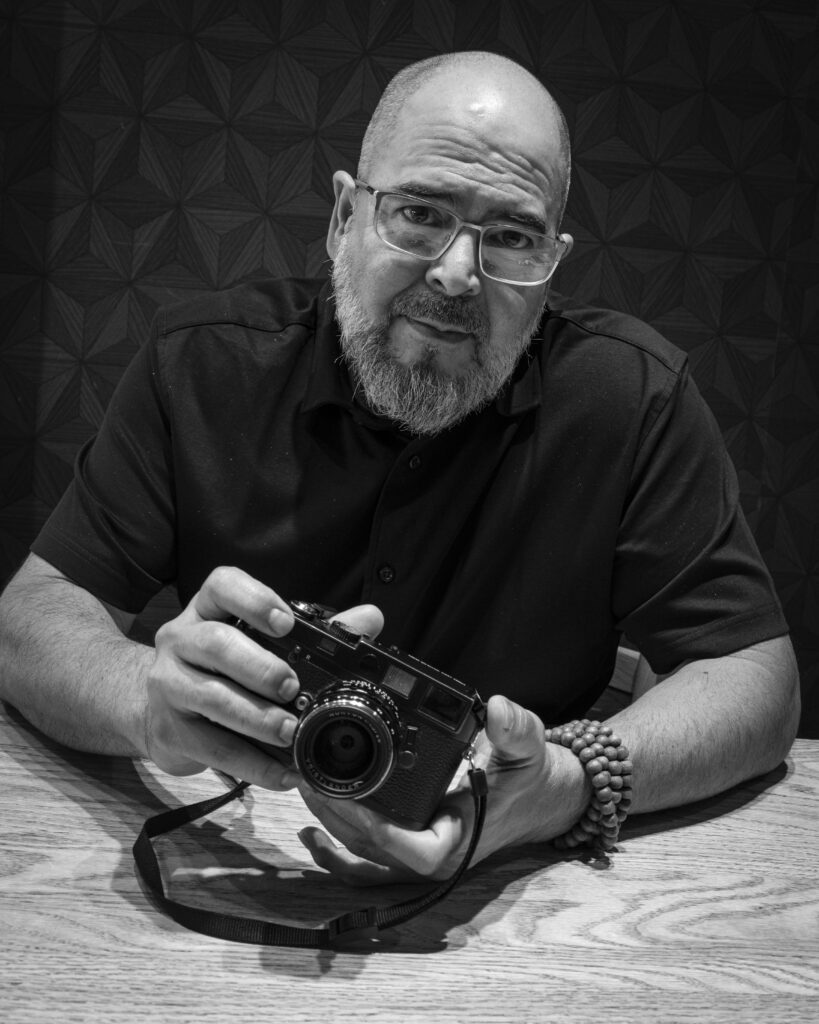
“I was amazed that he could pick up a camera so different from his own and take incredible photos almost without thinking,” Dempsey said. “Now that’s the skill of a true master!”
Dempsey said Gonzalez’s patience and attention taught him that making mistakes is part of learning. During his 30-year career, Dempsey has covered everything from Super Bowls to the World Series and the NBA Finals. He has documented presidential campaigns and worked with renowned international brands.
“That day became a turning point for me. He cared enough to dedicate his time to me and share his knowledge. To this day, I feel very fortunate to be able to call Rudy a close friend,” he said.
Gonzalez said his main piece of advice to aspiring journalists is to not be afraid to fail and make mistakes.
“If they don’t make mistakes, it’s a sign that they aren’t trying hard enough,” he said.
In 1999, Gonzalez was a member of the team of journalists at the Rocky Mountain News that won the Pulitzer Prize in Breaking News Photography for coverage of the student shootings at Columbine High School. The Pulitzer judges selected the staff’s work “for its powerful collection of emotional images.” He said his time at the Rocky Mountain News was one of the most formative periods of his career.
“It felt like winning an Oscar as a team; that was the best part, but there were also many mixed emotions. We wanted to celebrate the recognition, but at the same time, we couldn’t,” Gonzalez said, his eyes drifting off into the distance as he recalled the experience. “That announcement came with many tears and much sadness.”
The newspaper staff’s coverage lasted a year, and Gonzalez said the assignments, which included covering funerals and tragic stories consistently, took an emotional toll.
“It was traumatic to cover funerals of such young people who should be playing some sport or going out with their boyfriends or girlfriends,” he said. “But as photojournalists, we cannot take a step back; we have to portray these events.”
Gonzalez said he has faced tragedy many times, but a sense of justice motivates him as a journalist. And during tragic moments, he asks himself, “How do I tell the story respectfully?” One of the most important lessons he’s learned is to forge a genuine connection with his subjects.
“You have to know how to wait for the right moment,” he said. “You can’t force a connection; it takes time. When I see people going hungry, people without access to medical care — when I see immigrants struggling for a better life — in those moments, I remember why I’m there — to document it and share it with the world, with dignity and absolute respect. I consider myself insignificant in the face of the immensity of the universe, but I hope that my small contribution is to encourage others to cultivate their curiosity.”
To view Gonzalez’s photography, visit his website.
Read Next: Hall of Fame DJ, Filmmaker Donnie Meals Reflects on 40 Years at SAC