



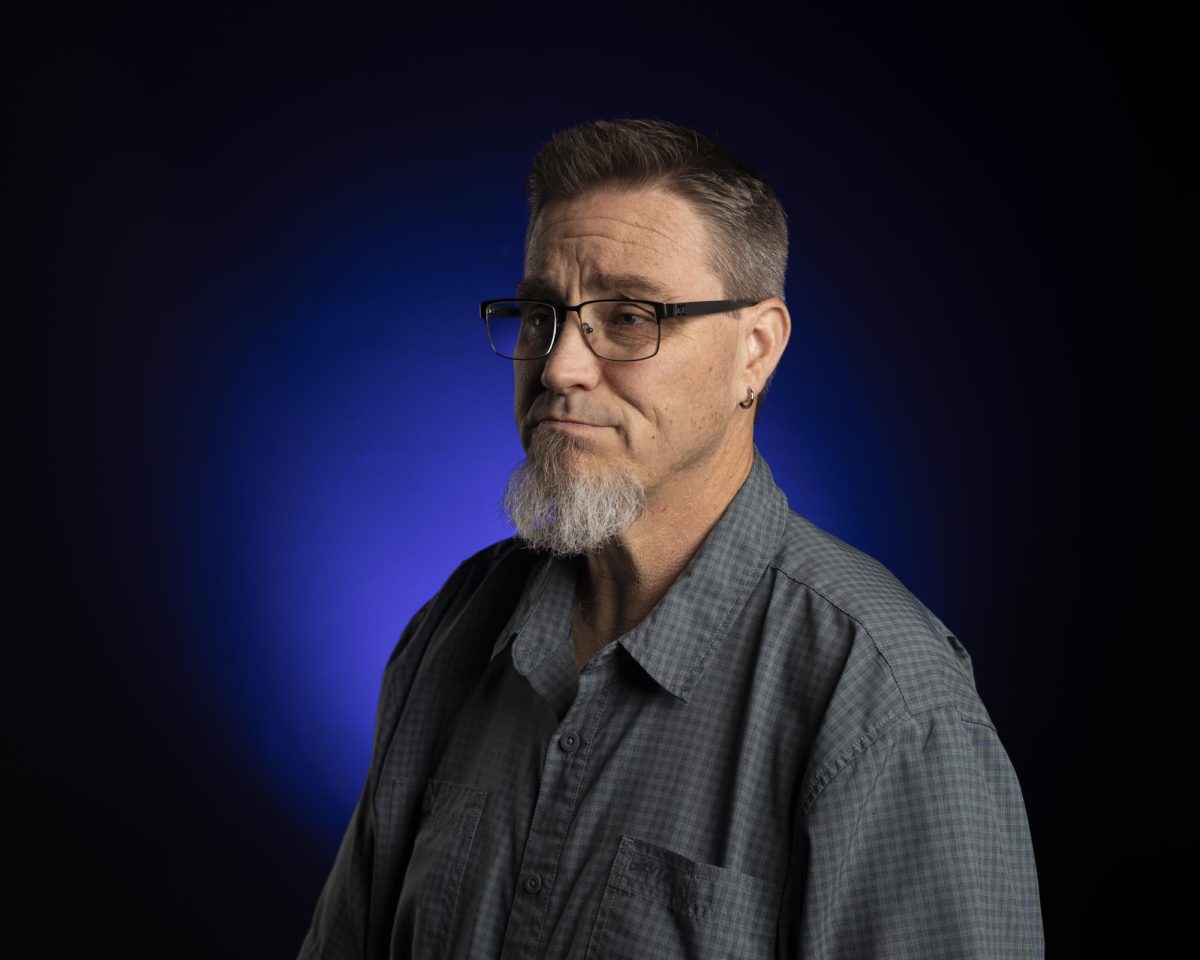











The glow of computer screens fills the classroom as students click through video footage, placing and trimming clips and adjusting sound levels. Their instructor, Tim Stewart, moves between them with the calm urgency of someone who spent years working against deadlines. When one student’s audio spikes, Stewart steps in with the phrase his students hear almost daily: “Negative nine all the time.”
It is a technical correction for maintaining consistent audio levels, but it also captures how Stewart teaches at San Antonio College. In his classes, students are expected to work with purpose, meet deadlines and fix mistakes quickly. Stewart brings those expectations from a 30-year career in television news, including time in Lubbock and nearly 27 years at KSAT in San Antonio.
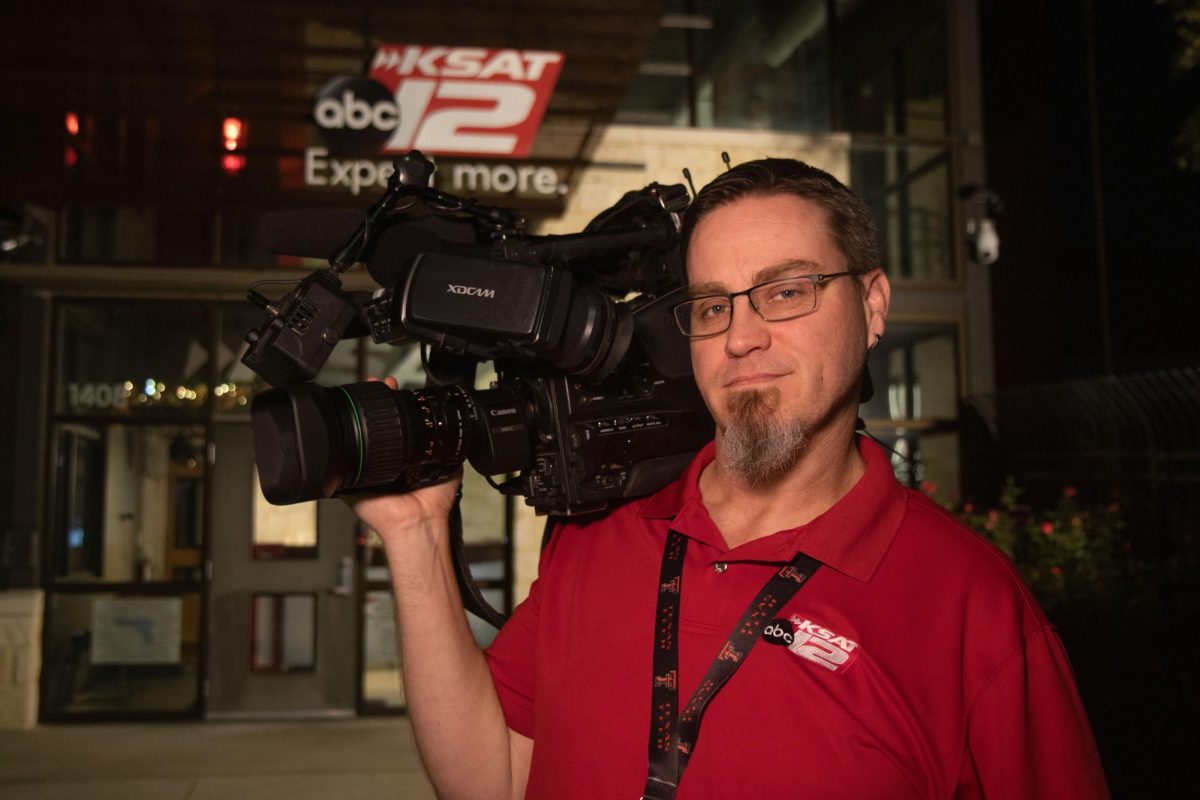
Now, instead of chasing breaking news, Stewart trains the next generation of multimedia journalists and storytellers. The lessons are demanding and tied to the way the communication industry actually works. Students enrolled in Stewart’s classes learn habits and discipline that can be carried into their careers.
Stewart’s interest in storytelling started early. Photography was his first love, and he remembers getting his first camera when he was about 9 or 10 years old. Growing up in Central Texas, he was drawn to music and photography before eventually heading to Texas Tech University. There, he said, his grandmother encouraged him to take a communications class. She was the only college graduate on either side of his family, and her advice helped point him toward a career in media.
In the early 1990s, Stewart studied what was then called telecommunications and began working part-time at a television station in Lubbock. He operated a floor camera and framed anchors during the evening news. After a few months, the station needed a news photographer, and Stewart moved into the field.
“They’re like, ‘Oh, it’s the same. It’s just out there, instead of being in the studio. All you have to remember is just zoom in on their eyes and focus, and you’ll be fine,” Stewart said. “That is absolutely not all I needed to know.”
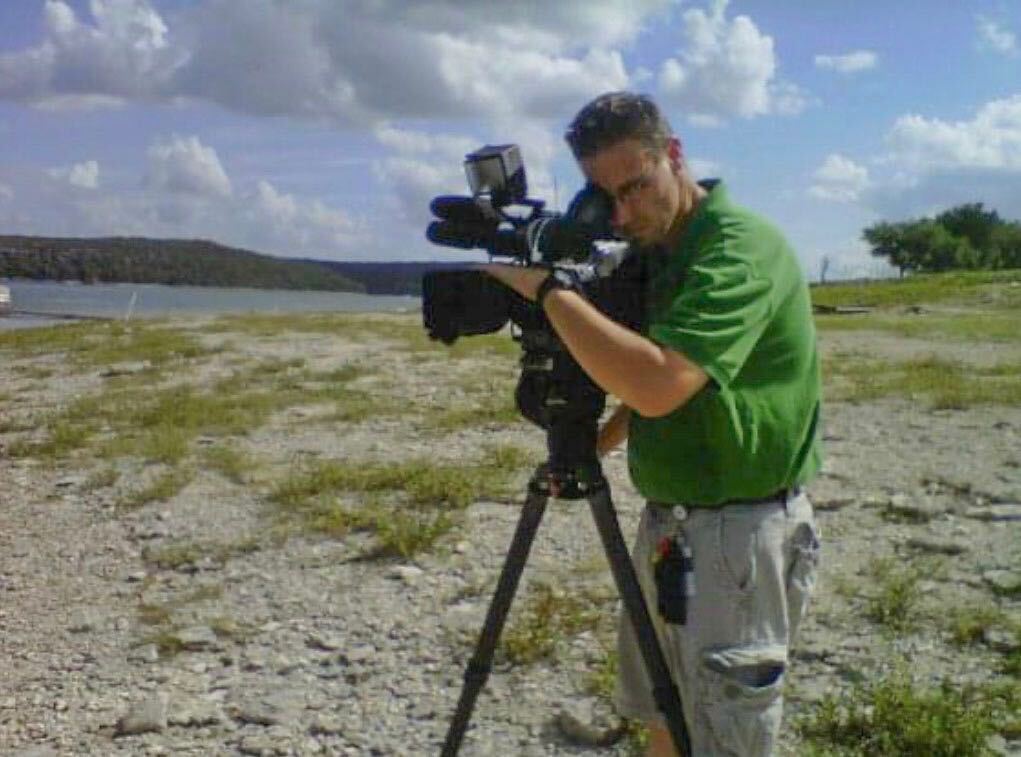
He learned through experience, repetition and advice from veteran photojournalists. One lesson stayed with him. A mentor told him to watch the vertical lines in every frame. If poles or doorways looked crooked, viewers would feel the shot was off. Stewart still teaches that lesson now.
“Everything I teach them (his students) is something I still use in practice today,” he said.
That practical mindset defines Stewart’s classes. He teaches TV Field Production and Radio/TV News, and he bases his instruction on what worked in real newsrooms.
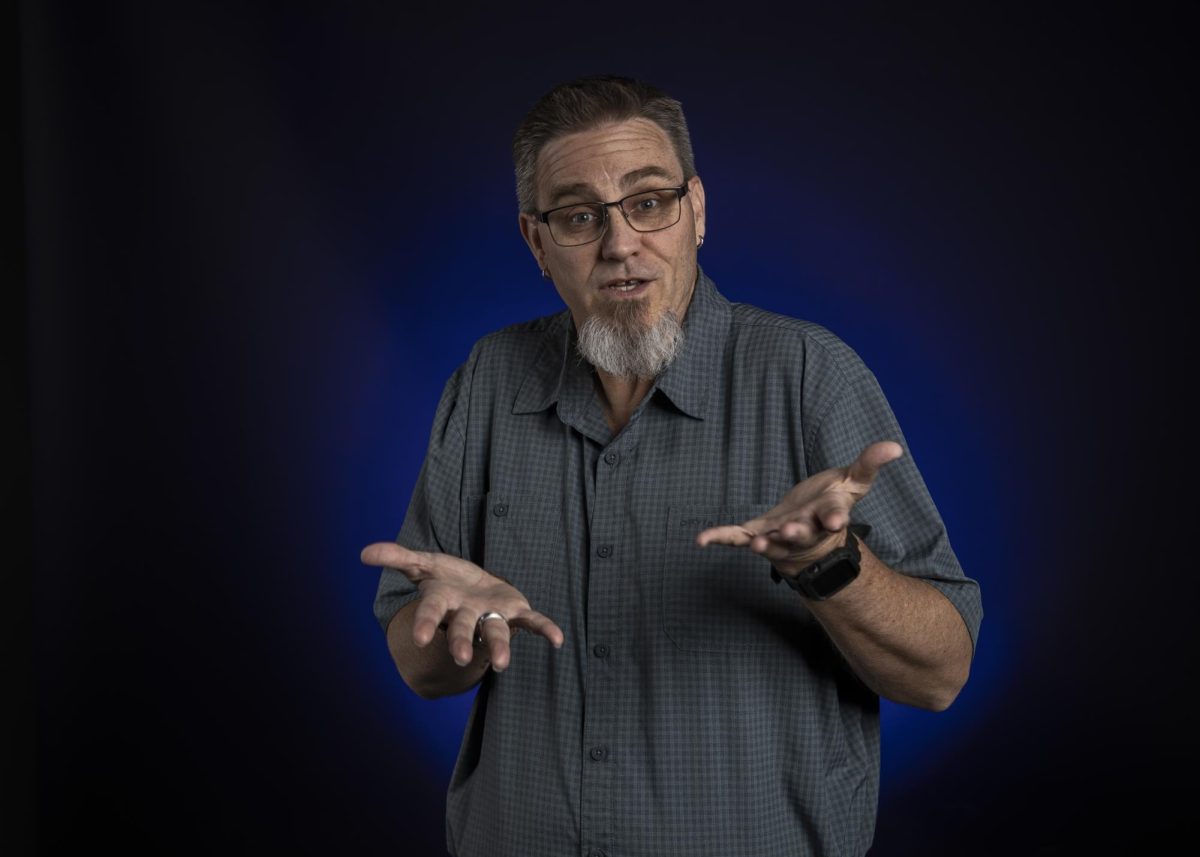
“I’m not going to show you how to finesse something,” Stewart said. “I’m not going to show you the most eloquent way to do something. I’m going to show you quick and dirty, because I used to live my life on a deadline.”
His courses revolve around what he calls his top 12 rules, a set of principles he built over his years in television news. The first rule is effort.
“You have to put in the work,” Stewart said.
Another rule is preparation.
“It’s better to have it and not need it than to need it and not have it.”
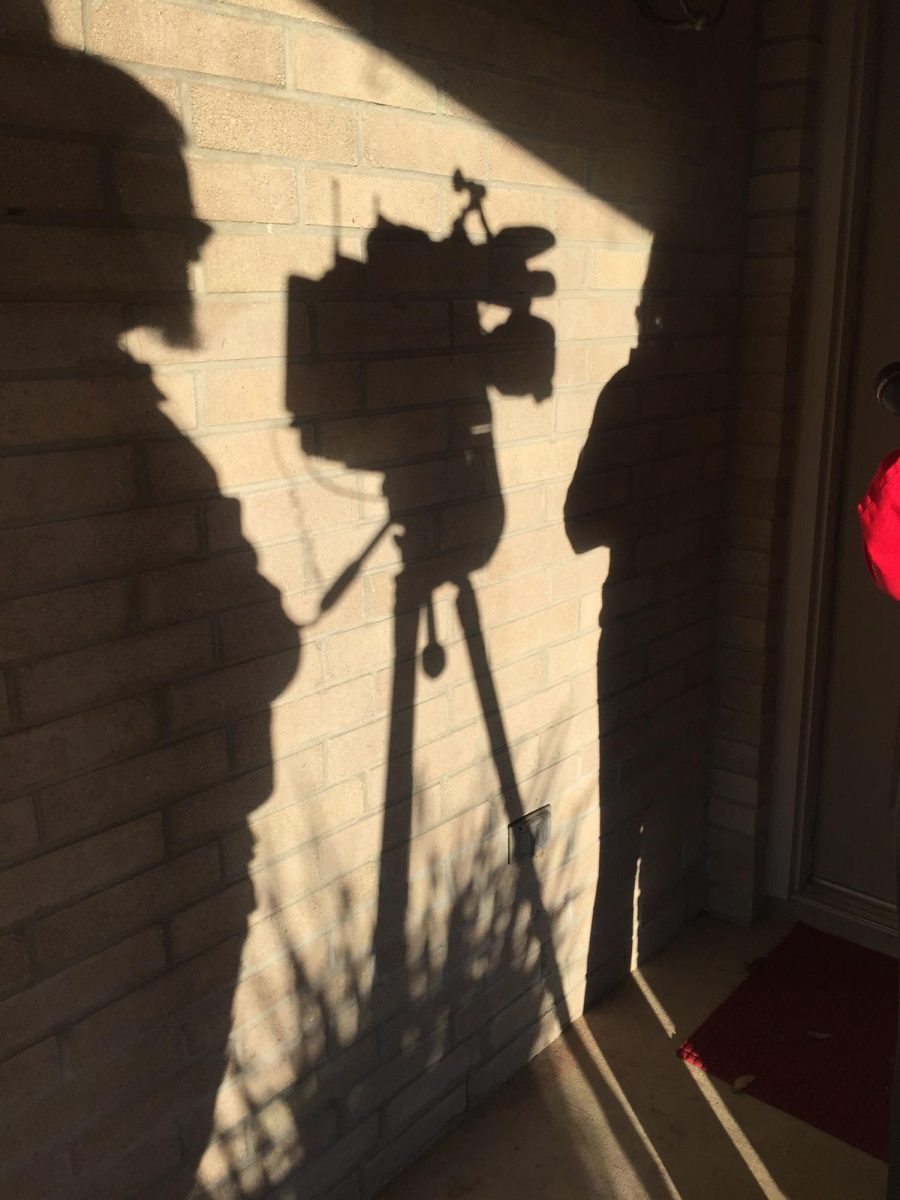
Stewart teaches students to carry extra memory cards and batteries and to shoot more footage than they think they will need because missed shots cannot always be recreated.
Victor Martinez, a Radio-TV-Film major, has taken two of Stewart’s courses: TV Field Production and Radio and TV News. He said Stewart’s standards have changed the way he approaches stories, especially under pressure.
“Taking his news class — it’s like a fire hose,” Martinez said. “It’s not easy, but if you understand what you’re wanting to shoot — understand the story you’re trying to go for — you’ve got it in the bag.”
In Stewart’s classes, students pitch stories, report news and edit video under firm deadlines. The point is not just to finish an assignment; it’s to understand how fast a story can lose value if it’s not done on time.
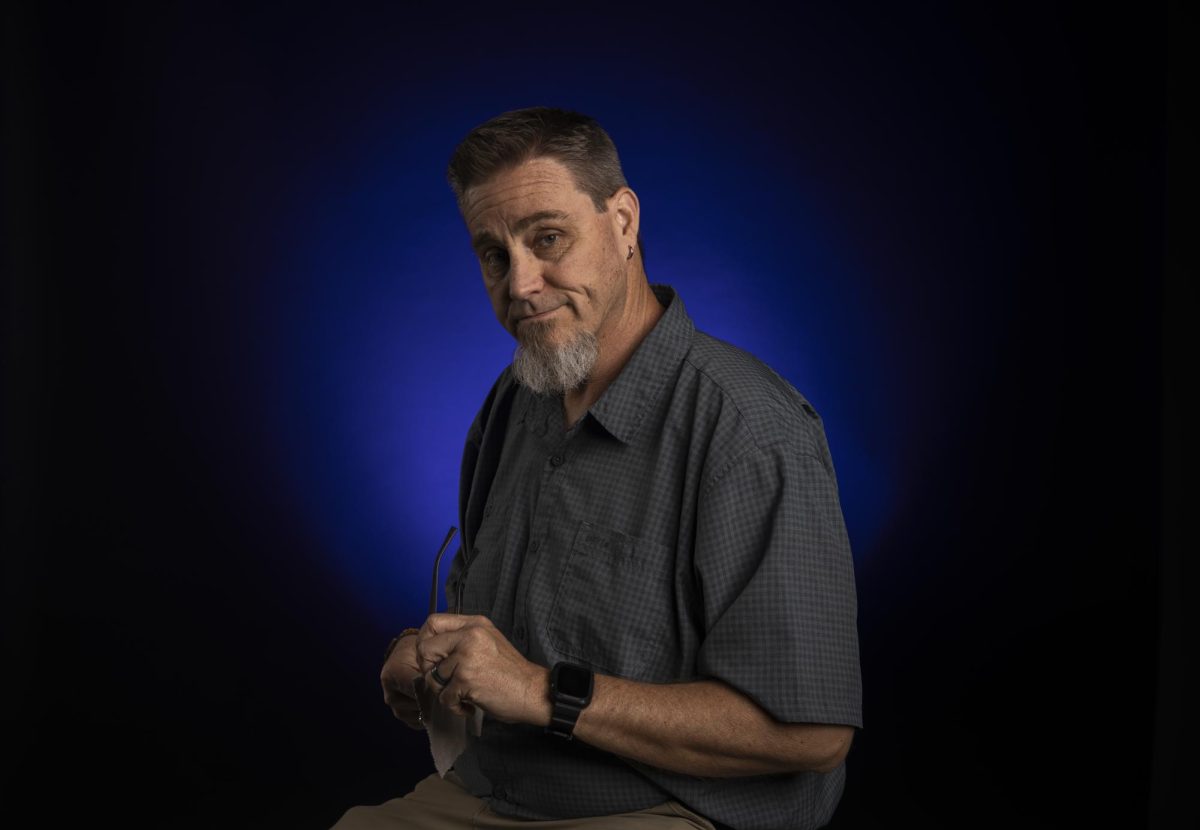
“The whole thing is meant to be structured like a newsroom,” Martinez said. “He tells us, ‘If you miss the deadline, that’s old news.’”
Stewart frequently reminds his students, “Old news is no news,” and Martinez said that lesson seems directly tied to the world students hope to enter after college.
Stewart does not teach as if every project will go perfectly. He teaches students how to keep working when a shoot falls apart, a source backs out, or the footage is not as strong as expected.
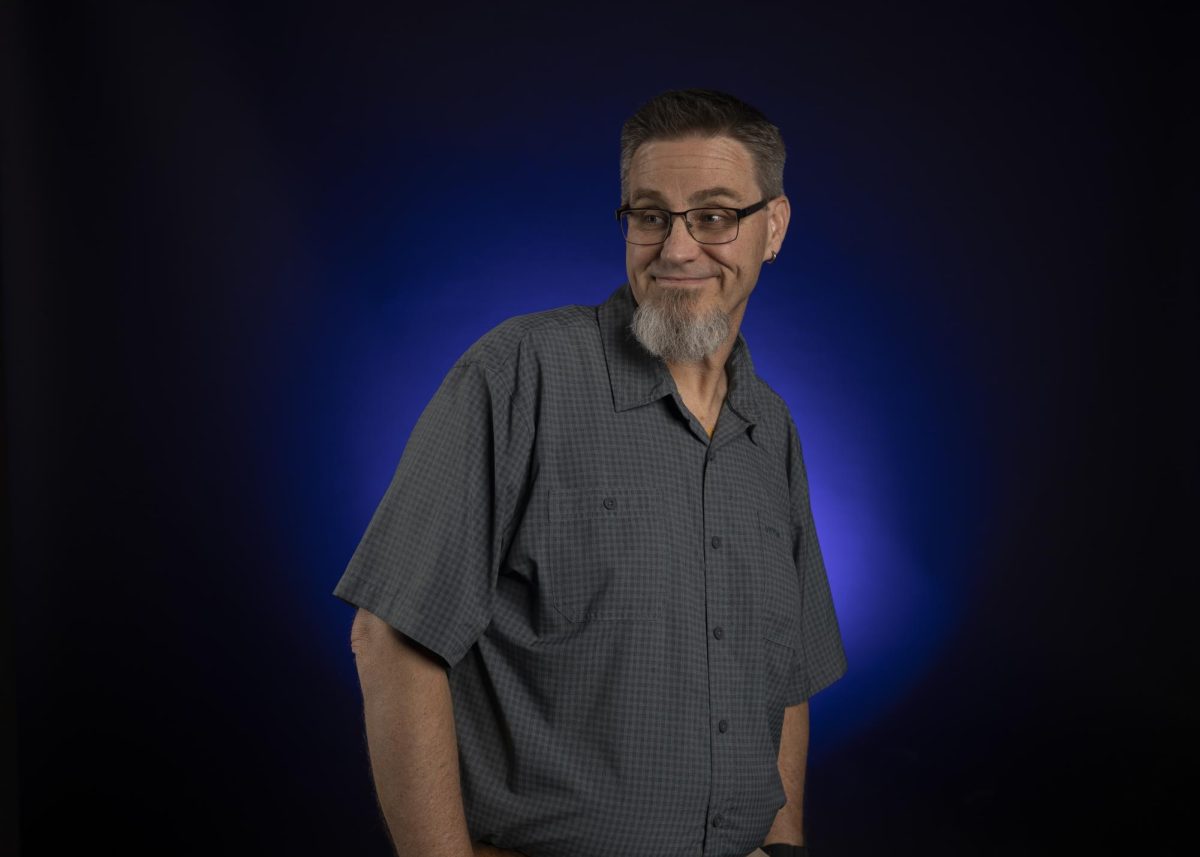
“He’s really preparing us for actual newsrooms, because sometimes it’ll be great — you hit the ground running. And sometimes it’ll just be a dud, and you just got to work with it,” Martinez said.
Stewart said that pressure reflects the reality of modern journalism. Many TV stations no longer send a reporter and photographer out together. Instead, one person is often expected to shoot video, conduct interviews, write the script and edit the final story — alone. Stewart prepares his students for that reality.
“My ultimate goal is to send somebody out with the understanding of what it takes to be a multimedia journalist,” he said.
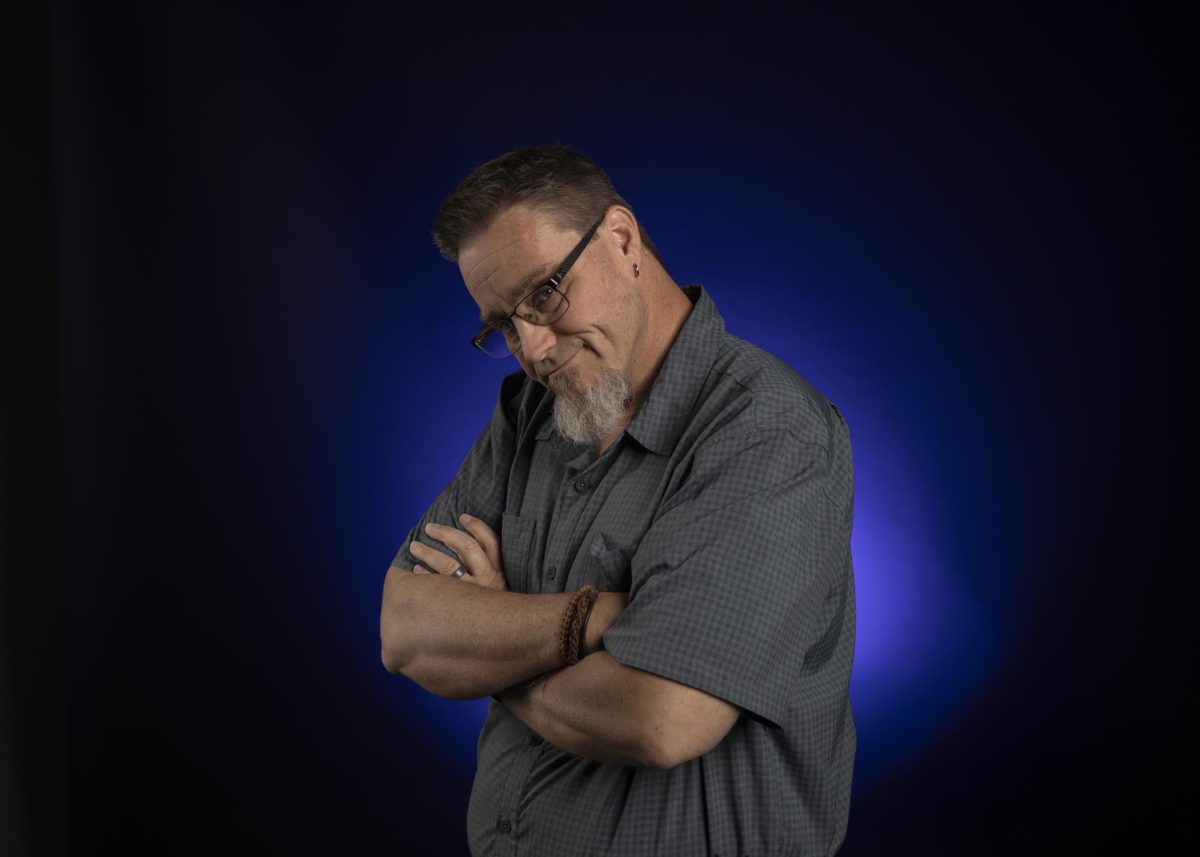
Even with all the technical demands of journalism, Stewart said storytelling is the fundamental skill he’s teaching.
(Jacob R. Lopez)
“The bottom line for all of this is, I want you to know how to use a camera and how to use editing so that you can tell a story,” he said. “It all comes down to storytelling.”
Radio-TV-Film major Dylan Norris said Stewart’s teaching has made his work feel more precise and professional. In Stewart’s TV field production class, students must produce at least one broadcast report on their own and revise it through direct classroom critique. Norris said that feedback has helped students understand not just what to fix, but why those details matter.
“There’s a lot of live feedback. He’ll do a quick one-on-one with us; that way, we understand exactly what we’re doing,” Norris said. “He treats us like professionals, not just students.”
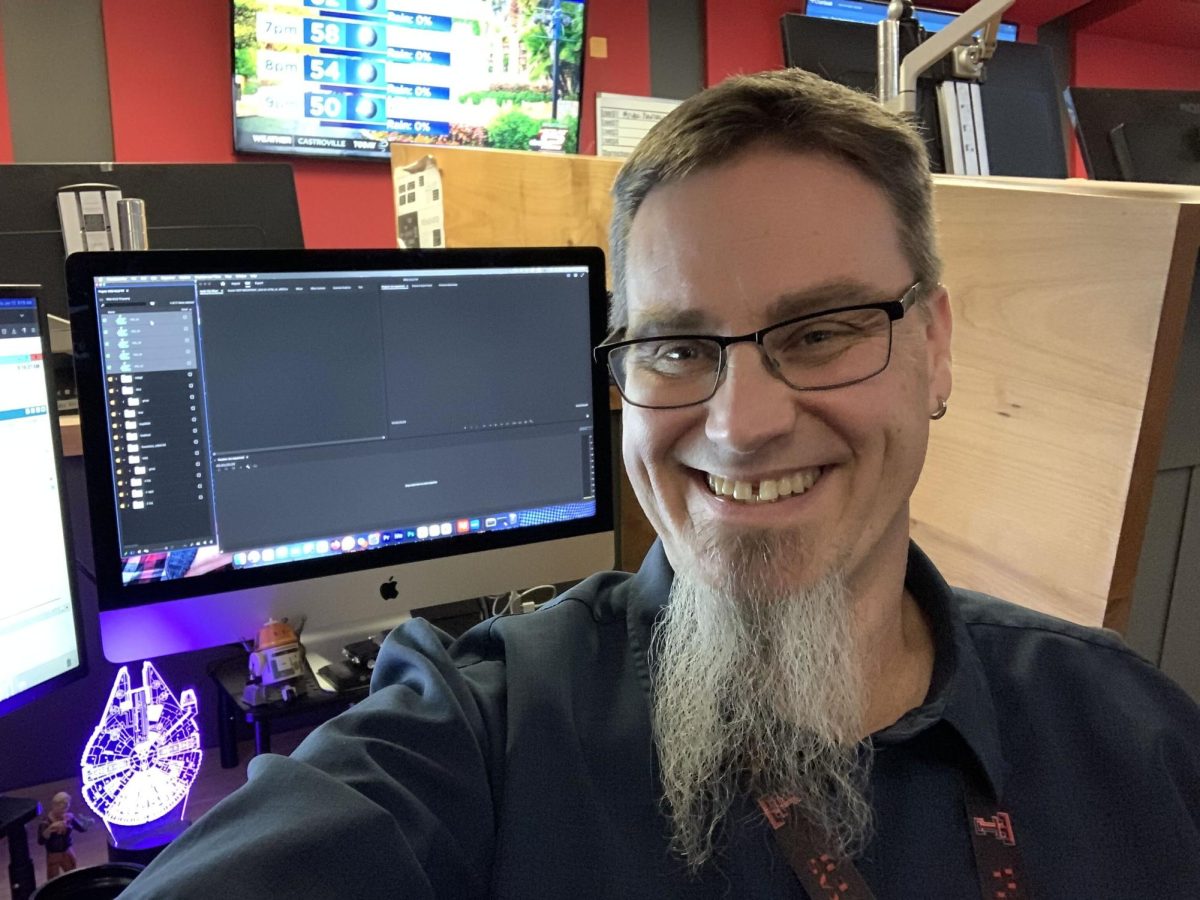
Stewart said teaching offers a different kind of purpose than news did. After decades of covering tragedies, he said, helping students feels meaningful. He’s not trying to win students over with easy praise or a relaxed workload.
“I love being able to help people,” Stewart said. “I feel like I’m helping people here … I want people to genuinely learn what I have to teach.”
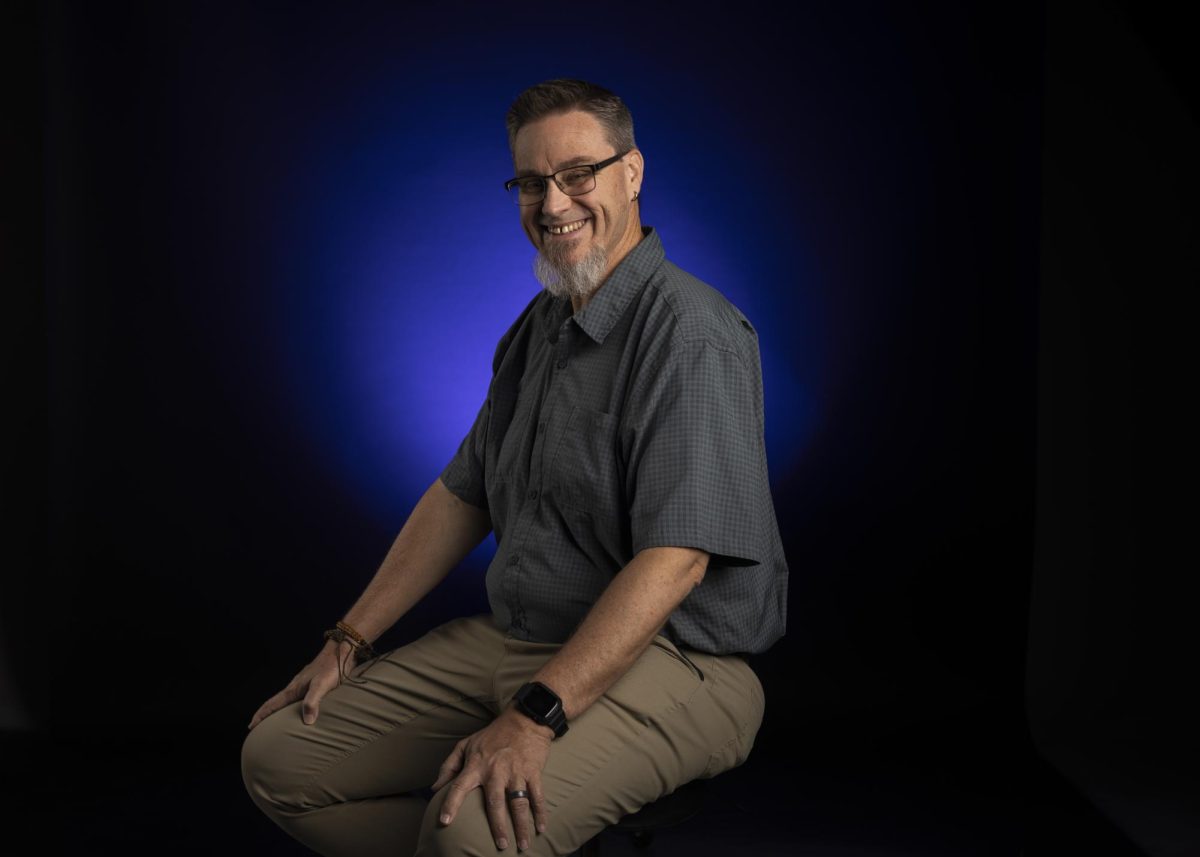
That belief connects to a lesson Stewart said his grandfather taught him as a child. Whenever he asked for something, his grandfather made him question what he was willing to do for it. Stewart adopted that philosophy into his teaching style.
“Nothing is going to get accomplished unless you do it,” he said. “It’s not just magically going to happen.”
In Stewart’s classes, he carries that wisdom forward as he pushes his students to achieve excellence with every shot sequence they build, deadline they meet and story they edit.
A good story is earned,” he tells them.
Read Next: Framing the Future – Inside a SAC Staffer’s Legacy of Changing Lives